

Response speed ratio of CNC machining and machining services
Release time:
2025-02-08
CNC machining greatly improves production efficiency, shortens order response cycle, redefines manufacturing response standards, and promotes industrial upgrading through automated programming, turning and milling technology and flexible production. In the future, intelligent combination will further amplify its speed advantage.
In the manufacturing industry, service response speed is an important indicator to measure the competitiveness of enterprises. With the development of technology, CNC machining (CNC machining) has gradually replaced traditional machining and become the mainstream production method. One of its core advantages is faster response speed. This article will analyze why CNC machining can "outperform" traditional machining in terms of efficiency from the perspective of technical principles and practical applications.
Automated programming: Say goodbye to manual intervention, a qualitative leap in efficiency
Traditional machining relies on manual operation of equipment, and experienced technicians are required to complete everything from drawing interpretation to tool adjustment step by step. For example, when machining complex parts, technicians need to repeatedly calibrate machine tools and replace tools, which is time-consuming and error-prone. CNC machining, through digital programming, directly converts design drawings into machine instructions to achieve fully automated production.
Taking CNC lathe machining as an example, the operator only needs to import the three-dimensional model and set the parameters, and the system can automatically generate the tool path, eliminating the need for manual calculation and trial cutting. This "one-button start" mode greatly shortens the production preparation time, and is especially suitable for the rapid delivery of small batches and multiple batches of orders.

Turning and milling technology: process integration, reducing turnover losses
In traditional machining, complex parts often need to be transferred between different equipment, for example, first use a lathe to complete the outer circle processing, and then move to the milling machine for slot processing. This multi-process switching not only increases logistics time, but may also cause precision errors. The turning and milling composite processing technology integrates turning, milling and even drilling functions through one device to achieve "one clamping, all processes completed".
Taking aviation parts processing as an example, the turning and milling composite machine tool can complete the precision processing of internal and external contours and special-shaped structures in the same coordinate system, avoiding the time waste caused by repeated positioning. Data shows that the use of turning and milling composite technology can increase the overall efficiency by more than 40%, significantly speeding up the order response rhythm.
Flexible production: fast switching to adapt to diverse needs
Traditional machining lines rely on special tooling and fixtures. When switching products, it is necessary to re-debug the equipment or even transform the production line, which takes several days. CNC machining, with the flexibility of the digital control system, only needs to change the program to adapt to the production of new parts, which is especially suitable for personalized customization needs.
For example, a medical device company uses CNC milling technology to achieve rapid conversion from orthopedic implants to dental instruments on the same production line, and the order delivery cycle is compressed from two weeks to three days. This ability to "change as needed" is the core logic of efficient response of CNC machining.
Conclusion: Technological evolution behind speed
CNC machining has redefined the response standards of the manufacturing industry through automation, integration and flexibility. From the basic application of CNC lathe machining, to the innovative breakthroughs of milling technology, to the pursuit of excellence in precision machining, this efficiency revolution is continuously promoting industrial upgrading. In the future, with the deep integration of intelligence and industrial Internet, the speed advantage of CNC machining may be further amplified, injecting stronger momentum into "China's smart manufacturing".
Related Products
CNC machining multi-axis linkage accurately processes tooth profile and journal size
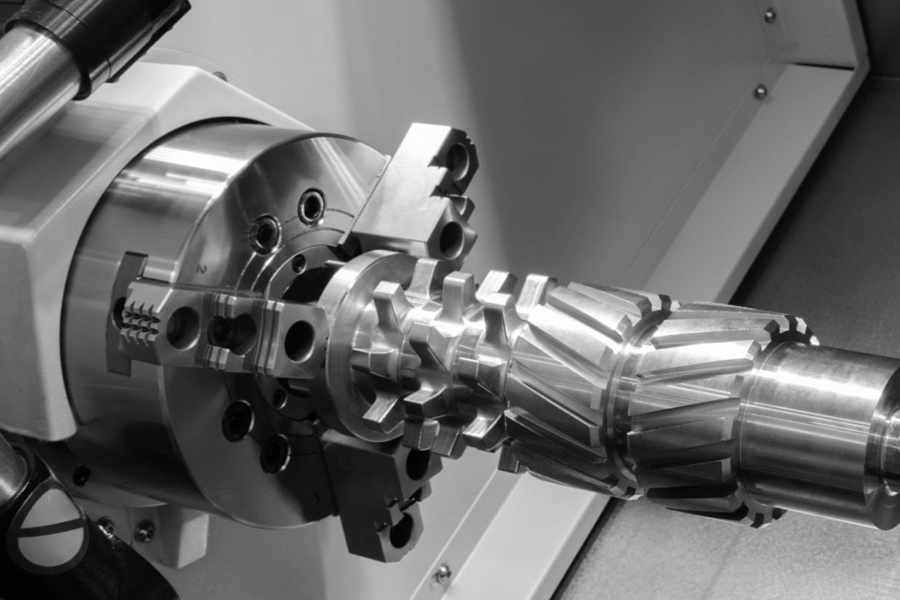
CNC machining technology plays a core role in the machining of precision gears and shaft parts, achieving high-precision micron-level precision, significantly improving the wear resistance and fatigue resistance of parts, and ensuring the stable operation and high quality of the transmission system. In modern industrial manufacturing, its application in automobile manufacturing, precision instruments, industrial equipment and other fields has significantly improved the overall quality.
2025-06-28
Automotive precision parts processing: Use high-precision gears to drive the future of new energy
The development of new energy vehicles has put forward higher requirements for the precision of parts. The breakthrough of micron-level manufacturing technology has laid the foundation for the stable operation of the power system. High-precision gears are innovatively applied in the energy conversion system of new energy vehicles, which reduces friction loss, improves transmission efficiency and prolongs gear life.
2025-06-18
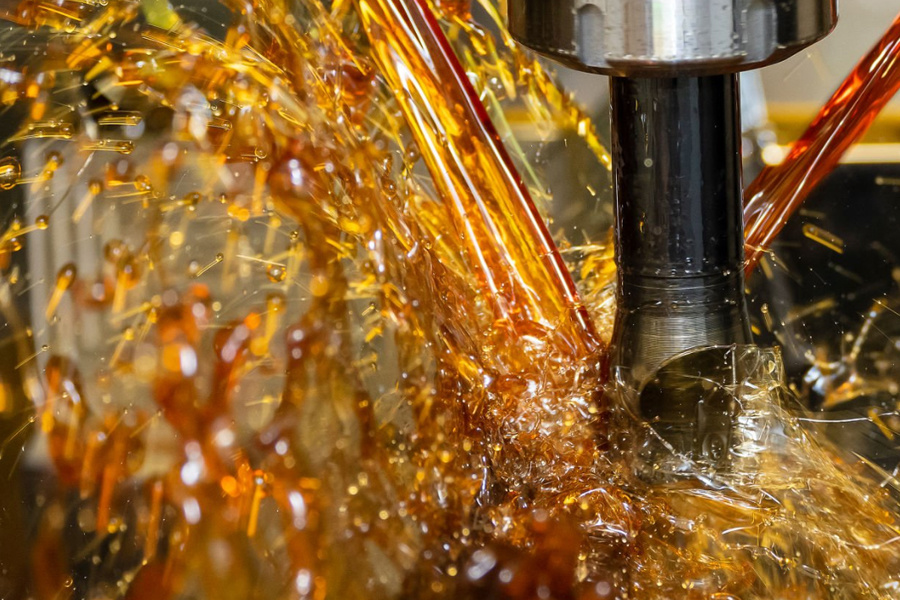
The manufacturing process of precision accessories in modern medical equipment, especially the use of core processing technologies such as CNC turning and laser micro-welding to achieve precise manufacturing in complex medical scenarios. These technologies not only require precise dimensional control, but also must meet biocompatibility and long-term stability.
2025-06-14
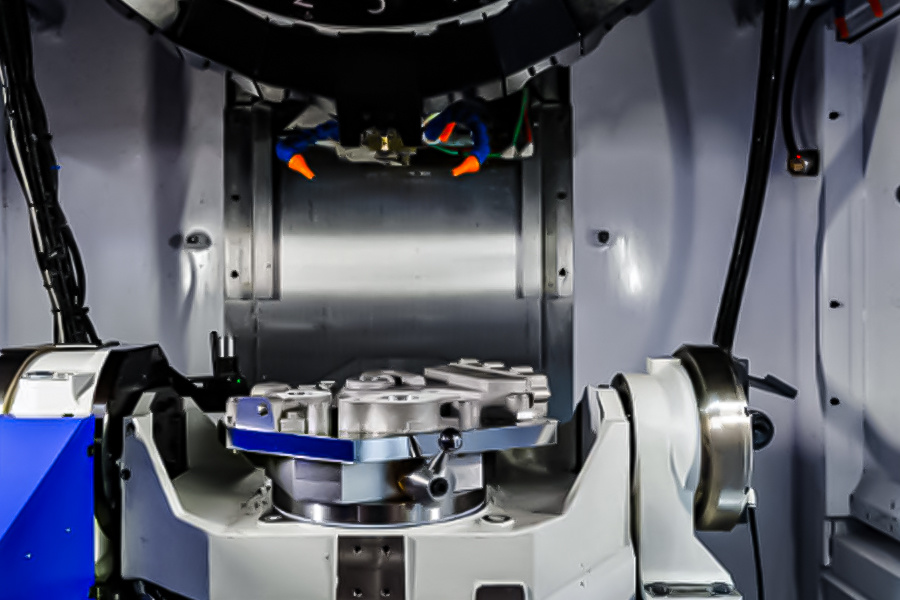
Five-axis machining centers have gradually become the core equipment for the manufacture of complex parts due to their multi-dimensional dynamic machining capabilities. Compared with four-axis equipment, five-axis machining centers significantly improve the machining accuracy and surface quality of special-shaped structural parts through multi-angle synchronous cutting, shortening the production cycle.
2025-06-11



Contact Information

Mailbox:haiqi.liang@chuntian-ctt.com
Company address: Area B and Area C, Building A, Factory Building 8, Hongqi Road, Hongqi Town, Jinwan District, Zhuhai City
Skype:haiqi.liang@chuntian-ctt.com
WhatsApp:+86 13318966480
Phone:+86 13318966480
Mail:haiqi.liang@chuntian-ctt.com