

The cost control of machining is more effective than that of CNC machining?
Release time:
2025-02-06
CNC machining is highly precise and efficient, but traditional machining has cost advantages in equipment investment, labor costs, material utilization, and production flexibility. It is suitable for simple parts and extremely small batch/single-piece production, providing a diversified equipment investment perspective for small and medium-sized enterprises.
In the manufacturing industry, CNC machining (computer numerical control machining) is highly favored for its high precision and high efficiency, especially in the fields of precision machining and complex parts manufacturing. However, traditional machining (such as lathes, milling machines, etc.) still shows significant cost control advantages in certain scenarios. This article will explore why traditional machining is more cost-effective than CNC machining in certain situations from the aspects of equipment investment, labor costs, material utilization and production flexibility.
Equipment investment: the "low threshold" advantage of traditional machining
CNC machining equipment, such as CNC lathe machining centers and CNC milling equipment, are usually expensive. A basic model of CNC machine tool may cost hundreds of thousands of yuan, while high-end models may even reach millions of yuan. In contrast, the price of traditional machining equipment is much lower. For example, the price of an ordinary lathe may be only 20,000-50,000 yuan, and even semi-automatic models usually do not exceed 150,000 yuan.

Labor cost: the "flexible employment" advantage of traditional machining
Although CNC machining has a high degree of automation, programming, debugging and maintenance still require professional engineers, and the labor cost is relatively high. Traditional machining shows significant labor cost advantages in the following scenarios:
- Simple repetitive parts processing: CNC machining requires 1 hour of programming and 2 hours of machining to process 10 identical shaft parts, while traditional lathes can be directly operated by skilled technicians in 3 hours, with similar labor costs but no programming costs.
- Flexible advantages of maintenance masters: Feedback from a ship maintenance company: To repair a rusty marine flange, the master charged 200 yuan for 30 minutes using an ordinary milling machine. If a CNC machine tool is used, programming, debugging and machining will take 1.5 hours, with a total cost of more than 400 yuan.
Through data comparison, it is concluded that in small-batch and multi-variety production, the comprehensive labor cost of traditional machining can be 40%-60% lower than that of CNC machining.
Material waste: the "trial and error cost" advantage of traditional machining
Although CNC machining has a high material utilization rate, it may generate hidden waste in the trial production stage. For example, programming errors may cause the entire piece of material to be scrapped, or to prevent program errors, operators often reserve a larger machining allowance.
Traditional machining, through the "measuring and cutting" method, is particularly suitable for the following situations:
- Rare material processing: When engraving a titanium alloy artwork blank with a unit price of 10,000 yuan, the technician can reduce the cutting amount through manual fine-tuning;
- Non-standard parts trial production: When a watch factory made a prototype of a conceptual watch case, the master used an ordinary milling machine to gradually trim it, and the material loss was reduced by 17% compared with CNC processing.

Production flexibility: The "quick response" advantage of traditional machining
CNC machining requires reprogramming and tool setting to switch products, while traditional machining responds faster in the following scenarios:
- Ultra-small batch orders (1-5 pieces): Processing 5 special-shaped copper connectors requires 2 hours of programming and 1 hour of processing in CNC machining, while traditional technicians directly operate based on drawings, and the total time is only 2.5 hours.
- Frequent design changes: When a scientific research team of a university developed a drone bracket, the traditional milling machine realized the "design-modification-reprocessing" cycle on the same day, while the CNC machining group was delayed due to repeated program modifications.
- Economic account comparison: For small batch and multi-variety production, traditional machining can save about 80% of process preparation time (data source: IMTS 2022 report).
Maintenance and energy consumption: the "invisible money-saving" advantage of traditional machining
- Equipment maintenance cost: The annual maintenance fee of ordinary lathes is about 500-2000 yuan, while CNC machine tools need to regularly replace the servo system and detect accuracy, and the annual maintenance cost is as high as 20,000-50,000 yuan.
- Power consumption difference: A metal processing plant found that when processing aluminum alloy parts of the same specifications, CNC machine tools consume continuous power due to cooling systems, tool magazines, etc., and the energy consumption of a single piece is 25% higher than that of traditional machine tools.
- Second-hand equipment liquidity: Traditional machine tools have a simple structure, and the second-hand residual value rate can reach 40%-60%; while CNC equipment has a fast technology iteration, and the second-hand value of machines over 5 years old is often less than 20%.
There is no best technology, only the most suitable choice
The cost game between CNC machining and traditional machining is essentially a trade-off between scale effect and flexibility:
- Choose CNC machining: suitable for complex parts, medium and large batch production;
- Choose traditional machining: suitable for simple parts, extremely small batches/single pieces, and special environments.
This article reveals the irreplaceable nature of traditional machining in the field of cost control through specific scenario disassembly, and provides a diversified perspective for equipment investment of small and medium-sized enterprises.
Related Products
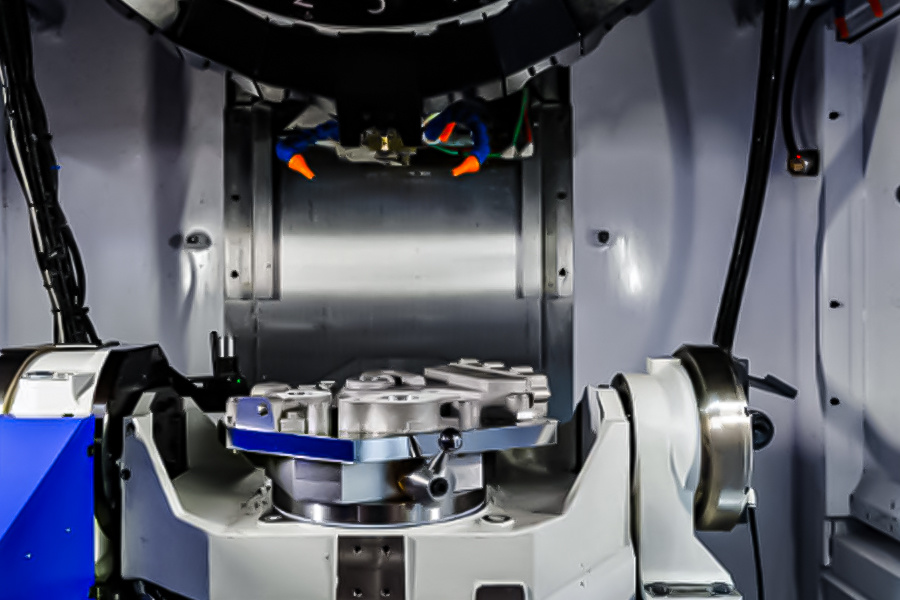
CNC machining multi-axis linkage accurately processes tooth profile and journal size
CNC machining technology plays a core role in the machining of precision gears and shaft parts, achieving high-precision micron-level precision, significantly improving the wear resistance and fatigue resistance of parts, and ensuring the stable operation and high quality of the transmission system. In modern industrial manufacturing, its application in automobile manufacturing, precision instruments, industrial equipment and other fields has significantly improved the overall quality.
2025-06-28
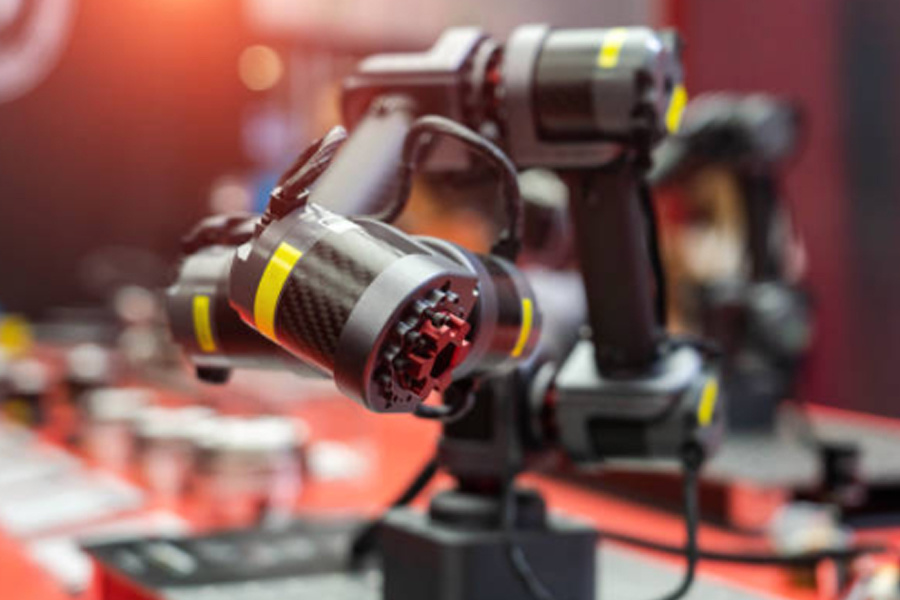
Automotive precision parts processing: Use high-precision gears to drive the future of new energy
The development of new energy vehicles has put forward higher requirements for the precision of parts. The breakthrough of micron-level manufacturing technology has laid the foundation for the stable operation of the power system. High-precision gears are innovatively applied in the energy conversion system of new energy vehicles, which reduces friction loss, improves transmission efficiency and prolongs gear life.
2025-06-18
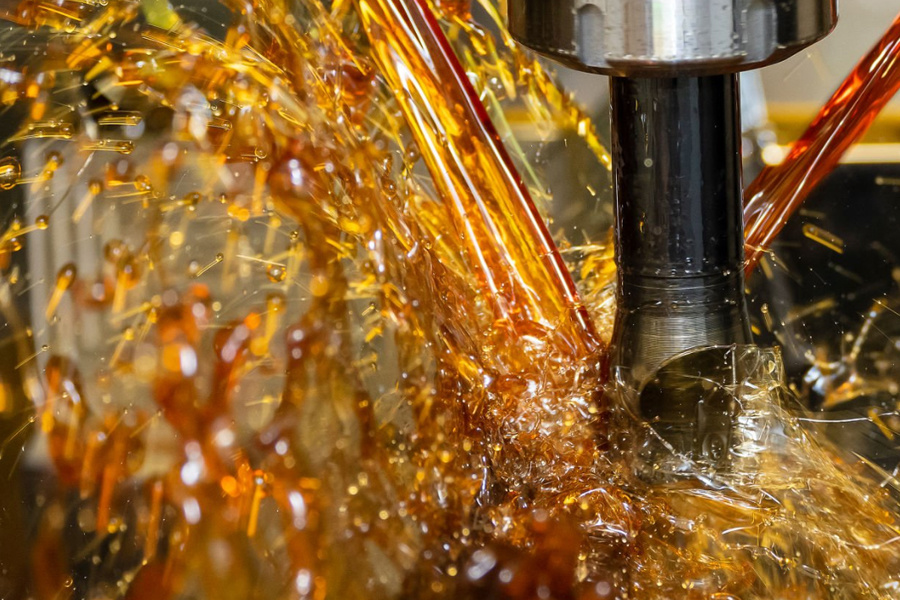
The manufacturing process of precision accessories in modern medical equipment, especially the use of core processing technologies such as CNC turning and laser micro-welding to achieve precise manufacturing in complex medical scenarios. These technologies not only require precise dimensional control, but also must meet biocompatibility and long-term stability.
2025-06-14
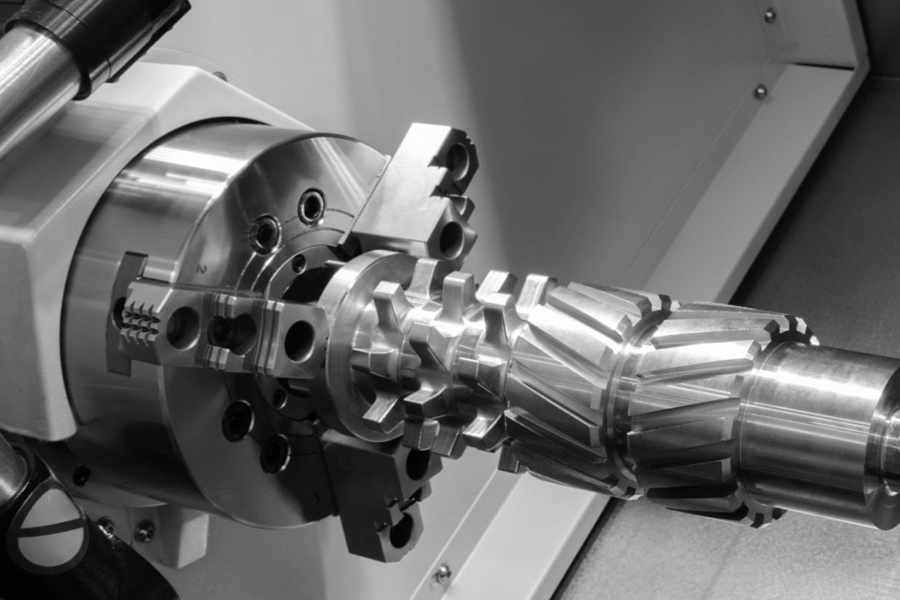
Five-axis machining centers have gradually become the core equipment for the manufacture of complex parts due to their multi-dimensional dynamic machining capabilities. Compared with four-axis equipment, five-axis machining centers significantly improve the machining accuracy and surface quality of special-shaped structural parts through multi-angle synchronous cutting, shortening the production cycle.
2025-06-11



Contact Information

Mailbox:haiqi.liang@chuntian-ctt.com
Company address: Area B and Area C, Building A, Factory Building 8, Hongqi Road, Hongqi Town, Jinwan District, Zhuhai City
Skype:haiqi.liang@chuntian-ctt.com
WhatsApp:+86 13318966480
Phone:+86 13318966480
Mail:haiqi.liang@chuntian-ctt.com